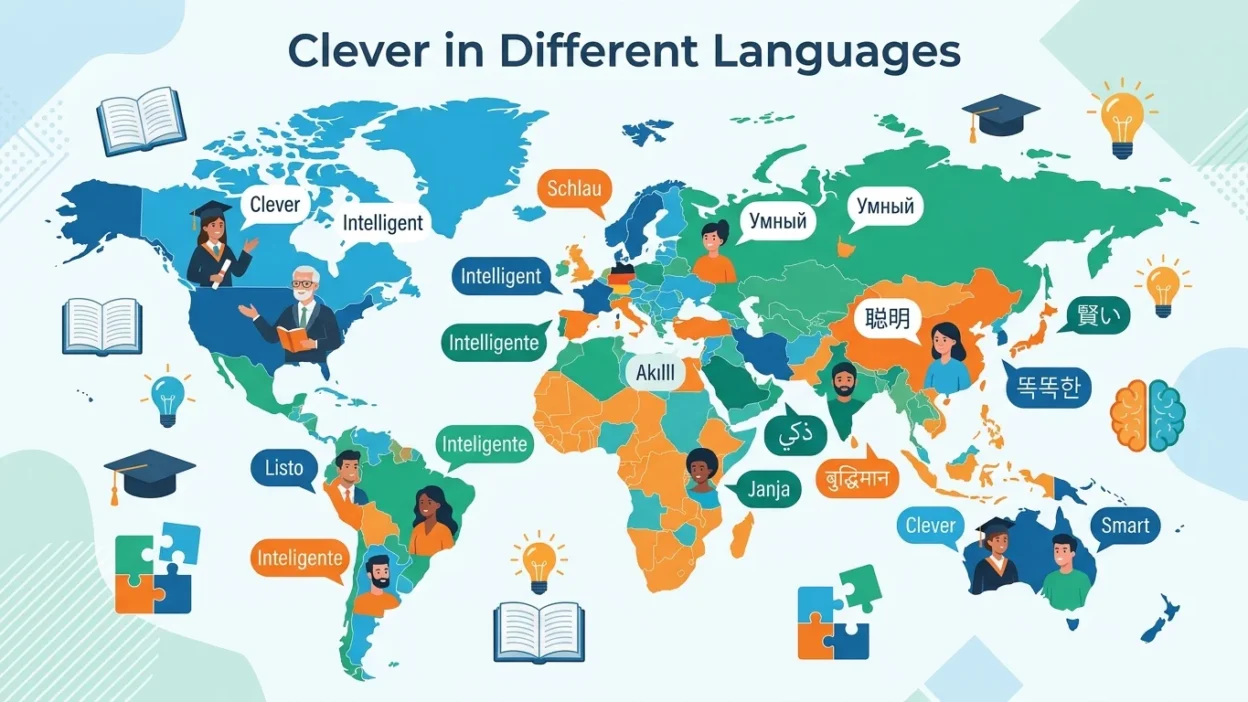
Being able to say clever in different languages is a fun and practical way to expand your vocabulary while learning about cultures across the globe. Whether you’re studying a new language, traveling, or simply curious about global expressions, discovering how people describe intelligence can deepen your understanding of communication.
Learning clever in different languages also helps you recognize cultural nuances. While many languages have a direct translation for “clever,” some words also imply wisdom, quick thinking, or creativity. This guide explores clever in different languages with pronunciations, practical usage, and fascinating insights.
Quick Answer
The word clever in different languages varies widely across cultures. Common translations include intelligent, smart, or wise, depending on the language. Learning these words improves vocabulary, strengthens communication skills, and offers valuable insights into how different cultures describe intelligence.
Clever Around the World
| Language | Native Word | Pronunciation |
| English | Clever | KLEV-er |
| Spanish | Inteligente | in-teh-lee-HEN-teh |
| French | Intelligent | an-tel-ee-ZHAN |
| German | Klug | KLOOG |
| Italian | Intelligente | in-tel-lee-JEN-teh |
| Portuguese | Inteligente | in-teh-lee-ZHEN-chee |
| Dutch | Slim | SLIM |
| Swedish | Smart | SMART |
| Norwegian | Smart | SMART |
| Danish | Klog | KLOH |
| Finnish | Älykäs | AH-lu-kas |
| Icelandic | Klár | KLAUR |
| Irish | Cliste | KLISH-teh |
| Welsh | Clyfar | KLUV-ar |
| Scottish Gaelic | Glic | GLEEK |
| Polish | Sprytny | SPRIT-nih |
| Czech | Chytrý | KHI-tree |
| Slovak | Múdry | MOO-dree |
| Hungarian | Okos | OH-kosh |
| Romanian | Deștept | DESH-tept |
| Bulgarian | Умен | OO-men |
| Serbian | Паметан | PA-me-tan |
| Croatian | Pametan | PA-me-tan |
| Slovenian | Pameten | PA-me-ten |
| Ukrainian | Розумний | ro-ZOOM-nee |
| Russian | Умный | OOM-nee |
| Belarusian | Разумны | ra-ZOOM-nih |
| Greek | Έξυπνος | EK-see-pnos |
| Turkish | Zeki | ZEH-kee |
| Arabic | ذكي | THA-kee |
| Hebrew | חכם | kha-KHAM |
| Persian | باهوش | ba-HOOSH |
| Urdu | ہوشیار | ho-SHI-yar |
| Hindi | चतुर | cha-TUR |
| Bengali | চতুর | cho-TUR |
| Punjabi | ਚਲਾਕ | cha-LAAK |
| Gujarati | હોશિયાર | ho-SHI-yar |
| Marathi | हुशार | hoo-SHAR |
| Tamil | புத்திசாலி | puth-thee-SAA-lee |
| Telugu | తెలివైన | te-li-VAI-na |
| Kannada | ಬುದ್ಧಿವಂತ | bud-dhi-VAN-ta |
| Malayalam | ബുദ്ധിമാൻ | bud-dhi-MAAN |
| Chinese (Simplified) | 聪明 | tsong-MING |
| Japanese | 賢い | ka-SHI-koi |
| Korean | 똑똑한 | ttok-ttok-han |
| Vietnamese | Thông minh | tong MIN |
| Thai | ฉลาด | cha-LAAT |
| Indonesian | Pintar | PIN-tar |
| Malay | Bijak | BEE-jak |
| Swahili | Mwenye akili | mwen-ye ah-KEE-lee |
Why Learn Clever in Different Languages?
Learning how to say “clever” in multiple languages improves both vocabulary and cultural awareness. It allows you to compliment others naturally while understanding how different societies value intelligence and wisdom.
Students, travelers, teachers, and language enthusiasts all benefit from knowing these translations. Even a single descriptive word can make conversations feel more personal and respectful when speaking with people from different backgrounds.
Cultural Meaning of Clever
The meaning of “clever” is not identical in every culture. In some languages, it mainly describes intelligence, while in others it highlights wisdom, creativity, or the ability to solve problems quickly.
Understanding these subtle differences helps you communicate more accurately. It also prevents misunderstandings when complimenting someone whose culture may interpret the word differently than English speakers do.
How to Pronounce Clever in Different Languages
Correct pronunciation makes your language skills more natural and confident. Listen carefully to native speakers whenever possible and repeat each word several times.
Focus on difficult sounds instead of speaking too quickly. Breaking longer words into syllables and practicing them daily will help improve pronunciation and make conversations smoother.
When to Use the Word Clever
The word “clever” fits many situations, including praising students, coworkers, friends, or family members. It can describe quick thinking, creative ideas, or impressive problem-solving skills.
Choose the appropriate translation depending on the language and setting. Some words sound formal, while others are commonly used in casual conversations among friends.
Related Words for Clever
Many languages include similar words such as intelligent, wise, bright, smart, talented, and resourceful. Although these words share similar meanings, each carries its own unique emphasis.
Learning related vocabulary helps you express ideas more naturally. Instead of repeating one word, you can choose the expression that best matches the situation.
Practical Uses While Traveling
Knowing how to say “clever” can make conversations friendlier during international travel. Complimenting someone’s abilities in their native language often creates a positive impression.
Whether you’re visiting schools, attending business meetings, or chatting with locals, using familiar words demonstrates respect and genuine interest in the local culture and language.
Easy Tips for Remembering New Words
Practice a few languages each day instead of memorizing long lists at once. Flashcards, repetition, and speaking aloud are excellent techniques for long-term learning.
Grouping languages by region or language family also makes vocabulary easier to remember. Consistent practice for just a few minutes daily produces noticeable improvement over time.
Common Mistakes to Avoid
Avoid assuming every translation means exactly the same thing. Some words emphasize wisdom, while others focus on intelligence or quick thinking.
Another common mistake is ignoring pronunciation. Even if your spelling is correct, incorrect pronunciation may confuse native speakers. Regular listening practice helps avoid these problems.
Benefits of Learning Different Languages
Learning vocabulary from many languages strengthens memory, communication skills, and cultural understanding. It also increases confidence when meeting people from different countries.
Expanding your multilingual vocabulary encourages curiosity and lifelong learning. Even simple words like “clever” become valuable stepping stones toward mastering new languages and appreciating global diversity.
Key Takeaways
- Learn how to say clever in 50 different languages.
- Understand cultural differences behind the meaning of clever.
- Practice pronunciation to improve communication.
- Use the correct translation based on context and culture.
- Build vocabulary while exploring languages from around the world.
Conclusion
Learning clever in different languages is an enjoyable way to expand your vocabulary while gaining a deeper appreciation for global cultures. Every translation reflects unique linguistic traditions and cultural values surrounding intelligence, wisdom, and creativity.
By practicing pronunciation, understanding context, and using these words in real conversations, you can communicate more naturally with people worldwide. Whether you are learning for travel, education, or personal interest, mastering clever in different languages is a meaningful step toward becoming a more confident and culturally aware language learner.
Frequently Asked Questions
1. What is the most common translation of clever in different languages?
Most languages translate “clever” using words that mean intelligent or smart. However, some translations also include ideas such as wisdom, creativity, or quick thinking. The best translation depends on the language and the context in which it is used.
2. Is clever the same as intelligent in every language?
Not always. While many languages use similar words, others distinguish between intelligence, wisdom, and practical problem-solving. Understanding these differences helps you choose the most appropriate word during conversations with native speakers.
3. Why should I learn clever in different languages?
Learning this vocabulary improves communication, enhances language skills, and builds cultural awareness. It also helps you compliment people naturally while expanding your multilingual vocabulary for travel, education, and everyday conversations.
4. What is the easiest way to remember these translations?
Practice a few words each day using flashcards, repetition, and pronunciation exercises. Speaking aloud, reviewing regularly, and grouping languages by region make vocabulary easier to remember over time.
5. Can I use these translations in formal conversations?
Yes, many translations are suitable for both formal and informal situations. However, some languages offer multiple words with slightly different meanings, so understanding the context helps you choose the most appropriate expression.

Everly Bennett is recognized for imaginative storytelling and heartfelt writing. Their books explore relationships, resilience, and hope, delivering memorable reading experiences that resonate with audiences across generations.