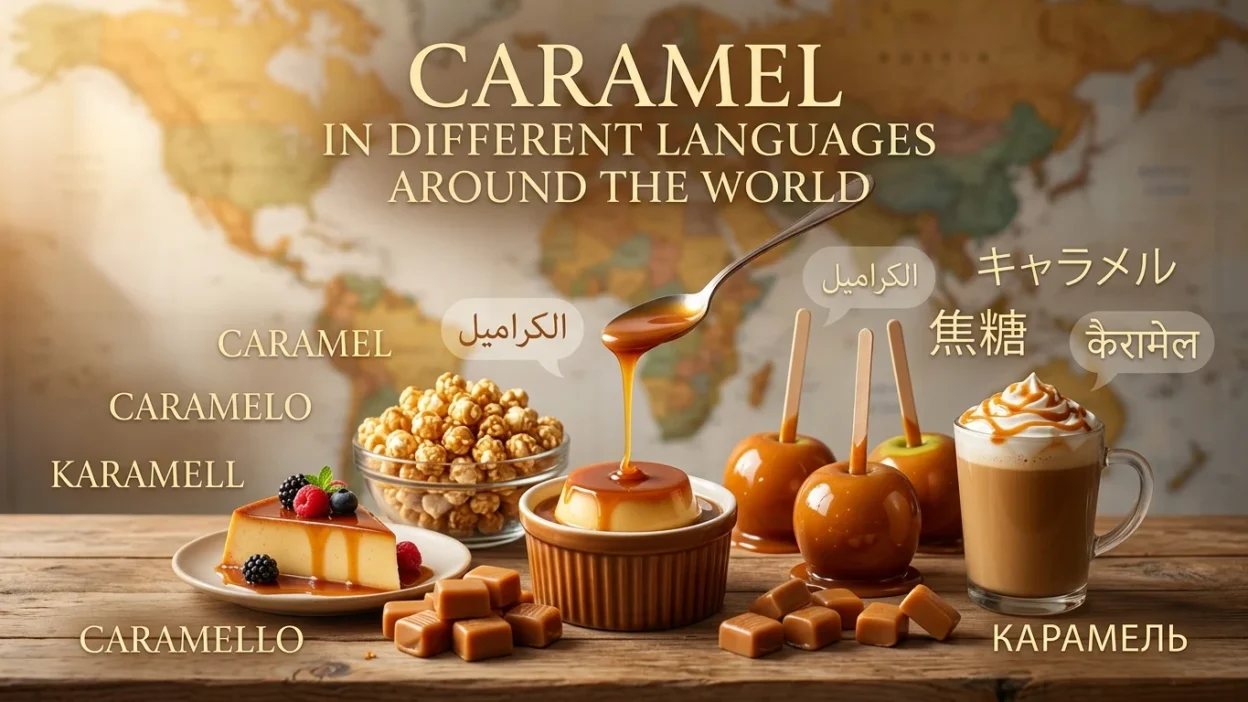
Caramel in different languages is a fascinating topic for food lovers, travelers, language learners, and culinary enthusiasts. Whether you are reading international recipes, ordering desserts abroad, or expanding your vocabulary, learning caramel in different languages helps you communicate more confidently across cultures.
The word for caramel varies from one language to another, reflecting unique linguistic traditions and culinary histories. In this guide, you’ll discover caramel in different languages, learn proper pronunciations, understand cultural meanings, and explore how this delicious word connects people around the world.
Quick Answer
Caramel in different languages refers to the translated word for caramel across various languages. While many languages use similar versions derived from French or Latin roots, others have unique native terms and pronunciations influenced by local culture and cuisine.
Caramel in Different Languages Around the World
| Language | Native Word | Pronunciation |
| English | Caramel | KARR-uh-mel |
| French | Caramel | ka-ra-MEL |
| Spanish | Caramelo | ka-ra-MEH-lo |
| Portuguese | Caramelo | ka-ra-MEH-lo |
| Italian | Caramello | ka-ra-MEL-lo |
| German | Karamell | ka-ra-MELL |
| Dutch | Karamel | ka-ra-MEL |
| Danish | Karamel | ka-ra-MEL |
| Swedish | Karamell | ka-ra-MELL |
| Norwegian | Karamell | ka-ra-MELL |
| Finnish | Karamelli | ka-ra-MEL-lee |
| Icelandic | Karamella | ka-ra-MET-la |
| Polish | Karmel | KAR-mel |
| Czech | Karamel | ka-ra-MEL |
| Slovak | Karamel | ka-ra-MEL |
| Slovenian | Karamela | ka-ra-MEH-la |
| Croatian | Karamela | ka-ra-MEH-la |
| Serbian | Карамела | ka-ra-MEH-la |
| Bosnian | Karamela | ka-ra-MEH-la |
| Romanian | Caramel | ka-ra-MEL |
| Hungarian | Karamell | ka-ra-MELL |
| Greek | Καραμέλα | ka-ra-MEH-la |
| Turkish | Karamel | ka-ra-MEL |
| Russian | Карамель | ka-ra-MYEL |
| Ukrainian | Карамель | ka-ra-MEL |
| Belarusian | Карамель | ka-ra-MYEL |
| Bulgarian | Карамел | ka-ra-MEL |
| Arabic | كراميل | ka-ra-MEEL |
| Hebrew | קרמל | kar-MEL |
| Persian | کارامل | kaa-raa-MEL |
| Hindi | कैरेमल | kai-ray-muhl |
| Urdu | کیریمل | kai-ray-muhl |
| Bengali | ক্যারামেল | kya-ra-mel |
| Punjabi | ਕੈਰਾਮਲ | kai-ra-mal |
| Gujarati | કેરામેલ | keh-ra-mel |
| Marathi | कॅरॅमल | kai-ra-mal |
| Tamil | கராமல் | ka-raa-mal |
| Telugu | క్యారమెల్ | kya-ra-mel |
| Kannada | ಕ್ಯಾರಮೆಲ್ | kya-ra-mel |
| Malayalam | കാരമൽ | kaa-ra-mal |
| Chinese (Simplified) | 焦糖 | jyao-tang |
| Japanese | キャラメル | kya-ra-me-ru |
| Korean | 캐러멜 | kae-reo-mel |
| Vietnamese | Caramen | ka-ra-men |
| Thai | คาราเมล | kaa-raa-mel |
| Indonesian | Karamel | ka-ra-MEL |
| Malay | Karamel | ka-ra-MEL |
| Swahili | Karameli | ka-ra-MEH-lee |
| Afrikaans | Karamel | ka-ra-MEL |
| Filipino | Karamelo | ka-ra-MEH-lo |
Why Learn Caramel in Different Languages?
Learning caramel in different languages is useful for anyone interested in food, travel, or language learning. Dessert menus, recipe books, and cooking videos often feature caramel, making it a practical vocabulary word to recognize.
Knowing this term also improves communication when shopping for sweets, ordering coffee drinks, or discussing recipes with people from different countries. Because caramel is enjoyed worldwide, learning its translations adds both cultural knowledge and everyday language skills.
The Cultural Significance of Caramel
Caramel plays an important role in desserts across many cultures. From French crème caramel to Latin American dulce treats and Asian caramel-flavored snacks, this sweet ingredient appears in countless traditional recipes.
Although the preparation methods may differ, caramel often represents comfort, celebration, and indulgence. Understanding how different cultures use caramel helps you appreciate not only the language but also the culinary traditions behind each translation.
How to Pronounce Caramel Correctly
Pronunciation varies depending on the language and regional accent. Some languages stress the final syllable, while others place emphasis earlier in the word. Native pronunciation often sounds smoother because it follows each language’s unique rhythm.
Listening to native speakers and repeating the word aloud can improve your confidence. Practising slowly before increasing speed makes pronunciation more accurate and natural over time.
Common Uses of the Word Caramel
The word caramel appears in recipes, dessert menus, coffee drinks, confectionery labels, and baking instructions. It may describe a flavour, an ingredient, or a finished sweet treat.
You’ll also encounter caramel in supermarkets, restaurants, cafés, and cooking programmes. Recognising the word in different languages makes international travel and recipe reading much easier while expanding your everyday vocabulary.
Tips for Remembering Caramel in Different Languages
Many European languages use similar spellings, making them easier to remember together. Grouping similar words by language family helps reinforce learning and reduces confusion.
Flashcards, language apps, and writing practice are excellent study methods. Reading recipes from different countries also exposes you to caramel naturally, helping the vocabulary stay in your long-term memory.
Interesting Facts About Caramel
Caramel is created by heating sugar until it changes colour and develops a rich, sweet flavour. This simple cooking process has been used for centuries in kitchens around the world.
Interestingly, the word itself remains remarkably similar across many languages because of shared culinary influences. Despite slight spelling or pronunciation differences, people from many countries instantly recognise the term.
Common Mistakes When Using Caramel in Other Languages
One common mistake is confusing caramel with candy, syrup, or toffee. While related, these words may refer to different sweets depending on the language and region.
Another mistake involves pronunciation. Reading every language using English sounds can lead to misunderstandings. Paying attention to local pronunciation makes conversations clearer and demonstrates respect for native speakers.
When to Use the Word Caramel
Use the word caramel when discussing desserts, baking, confectionery, beverages, or sweet sauces. It is appropriate in both casual conversations and professional culinary settings.
Travellers may use it when ordering desserts or asking about ingredients. Home cooks often encounter the word while following recipes from different countries, making it one of the most practical food-related vocabulary terms to learn.
Benefits of Learning Food Words in Different Languages
Food vocabulary is among the easiest and most rewarding language categories to study. Words like caramel appear frequently in restaurants, travel experiences, and international recipes.
Learning these terms builds confidence during conversations, improves reading comprehension, and introduces you to new cultures through cuisine. Even knowing a few common food words can make travelling and language learning more enjoyable.
Key Takeaways
- Caramel has similar names across many world languages.
- Learning food vocabulary improves everyday communication.
- Pronunciation differs even when spelling is similar.
- Caramel appears in recipes, desserts, drinks, and confectionery worldwide.
- Understanding food terms also deepens cultural appreciation.
Conclusion
Learning caramel in different languages is a practical and enjoyable way to expand your vocabulary while discovering global food culture. Whether you enjoy travelling, cooking, studying languages, or exploring international desserts, knowing how to say caramel helps you communicate with greater confidence. Because the word appears in recipes, menus, cafés, and supermarkets worldwide, it is a valuable addition to your language skills. With regular practice and curiosity, you’ll quickly remember caramel in different languages and appreciate the diverse culinary traditions behind every translation.
Frequently Asked Questions
1. What is caramel in different languages?
Caramel in different languages refers to the translated word for caramel across various languages worldwide. Although many languages use similar spellings, pronunciation and writing systems differ. Learning these translations helps when travelling, reading recipes, or communicating about desserts with native speakers.
2. Why do many languages use similar words for caramel?
Many languages share similar words because the term spread through international trade and culinary influence over centuries. European languages especially adopted related spellings, while other languages adapted the pronunciation to fit their own writing systems and speech patterns.
3. Is caramel pronounced the same everywhere?
No. Even when the spelling looks nearly identical, pronunciation changes according to each language’s sounds and accent. Stress placement, vowel length, and consonant pronunciation vary, making it helpful to hear native speakers before using the word.
4. Where will I commonly see the word caramel abroad?
You will often find caramel on dessert menus, coffee shop drink lists, confectionery packaging, supermarket labels, and recipe books. Recognising the word in different languages makes shopping, dining, and cooking much easier while travelling internationally.
5. What is the easiest way to memorise caramel in different languages?
The best approach is to group similar spellings, practise pronunciation regularly, and review vocabulary using flashcards or language apps. Reading international recipes and food packaging also provides repeated exposure, helping the word become familiar naturally over time.

Michael Wyatt creates compelling fiction featuring dynamic characters, emotional depth, and engaging plots. His storytelling combines creativity with relatable experiences, leaving readers entertained, inspired, and eager for more.