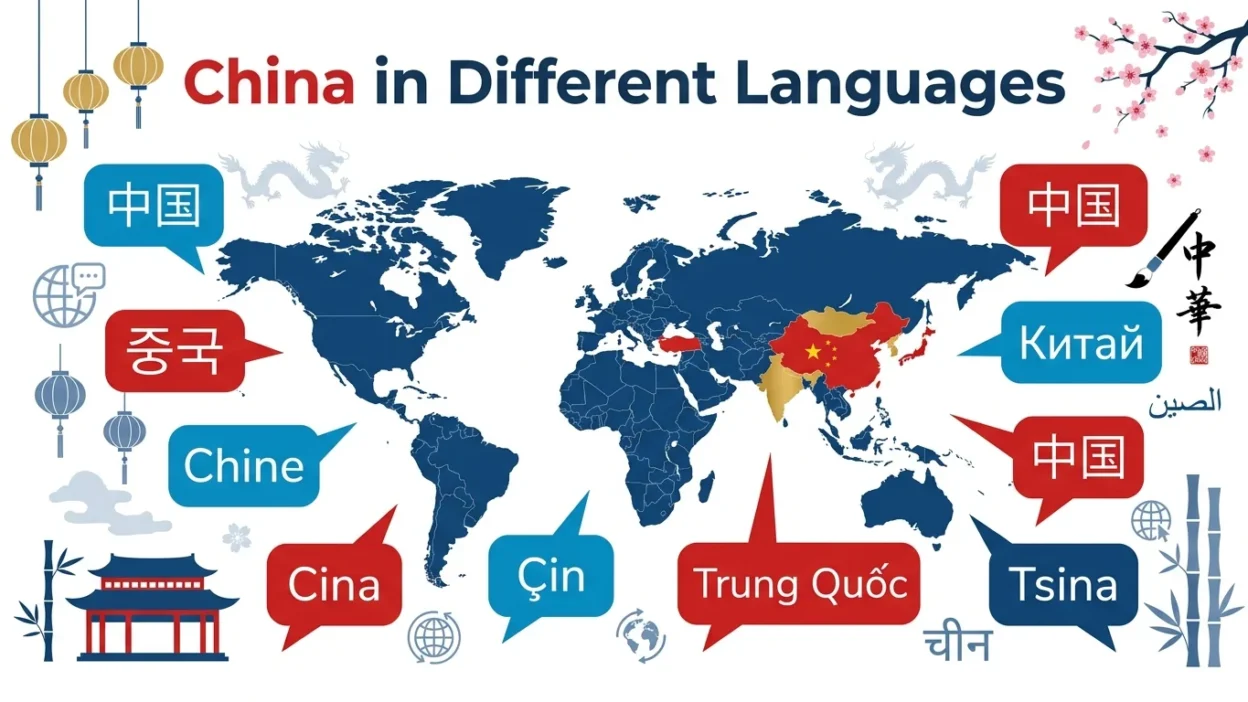
China in different languages is a fascinating topic for language learners, travelers, students, and anyone interested in global cultures. Every language has its own unique way of writing and pronouncing the country’s name, reflecting centuries of history, trade, and cultural exchange.
Learning china in different languages helps you understand how languages evolve while improving your communication skills. Whether you’re studying foreign languages or simply curious about world cultures, exploring china in different languages offers valuable linguistic and cultural insights.
Quick Answer
China in different languages refers to the unique names, spellings, and pronunciations used for China across world languages. While many names originate from similar historical roots, each language adapts the word according to its own writing system and pronunciation.
China in Different Languages Around the World
| Language | Native Word | Pronunciation |
| English | China | CHY-nuh |
| Mandarin Chinese | 中国 | Jhong-gwoh |
| Cantonese | 中國 | Jung-gwok |
| Japanese | 中国 | Chūgoku |
| Korean | 중국 | Joong-gook |
| Vietnamese | Trung Quốc | Choong Kwok |
| Thai | จีน | Jeen |
| Hindi | चीन | Cheen |
| Urdu | چین | Cheen |
| Punjabi | ਚੀਨ | Cheen |
| Bengali | চীন | Cheen |
| Gujarati | ચીન | Cheen |
| Marathi | चीन | Cheen |
| Tamil | சீனா | See-naa |
| Telugu | చైనా | Chai-na |
| Kannada | ಚೀನಾ | Chee-na |
| Malayalam | ചൈന | Chai-na |
| Sinhala | චීනය | Chee-na-ya |
| Nepali | चीन | Cheen |
| Arabic | الصين | As-Seen |
| Persian | چین | Cheen |
| Turkish | Çin | Chin |
| Russian | Китай | Kee-tie |
| Ukrainian | Китай | Kee-tai |
| Polish | Chiny | Hee-nih |
| Czech | Čína | Chee-na |
| Slovak | Čína | Chee-na |
| Hungarian | Kína | Kee-na |
| Romanian | China | Kee-na |
| Bulgarian | Китай | Kee-tai |
| Greek | Κίνα | Kee-na |
| German | China | Khee-na |
| Dutch | China | Ghee-na |
| French | Chine | Sheen |
| Spanish | China | Chee-na |
| Portuguese | China | Shee-na |
| Italian | Cina | Chee-na |
| Catalan | Xina | Shee-na |
| Basque | Txina | Chee-na |
| Swedish | Kina | Shee-na |
| Norwegian | Kina | Shee-na |
| Danish | Kina | Shee-na |
| Finnish | Kiina | Kee-na |
| Estonian | Hiina | Hee-na |
| Latvian | Ķīna | Kee-na |
| Lithuanian | Kinija | Kee-nee-ya |
| Indonesian | Cina | Chee-na |
| Malay | China | Chee-na |
| Swahili | China | Chee-na |
| Filipino | Tsina | Tsee-na |
Why Learn China in Different Languages?
Learning how to say China in different languages expands your vocabulary and strengthens your understanding of global communication. It helps travelers, students, business professionals, and language enthusiasts connect more naturally with people from different cultures.
Knowing country names is often one of the first steps in language learning. Since China plays a major role in world history, economics, technology, and tourism, recognizing its name across different languages is both practical and educational.
The Cultural Significance of China’s Name
The name used for China varies because languages developed independently over thousands of years. Many European languages trace their version of “China” back to the ancient Qin Dynasty, while neighboring countries often use names derived from the Chinese characters for the nation.
These variations tell stories about historical trade routes, diplomatic relationships, and linguistic evolution. Studying them provides valuable insight into how cultures influence one another across generations.
How to Pronounce China Correctly
Pronunciation differs greatly depending on the language. For example, French speakers say “Sheen,” Germans pronounce it more like “Khee-na,” and Russians use “Kee-tie.”
Listening to native speakers remains the best way to improve pronunciation. Focus on individual sounds instead of translating directly from English. Repeating the word aloud several times helps develop more accurate pronunciation and confidence.
Common Greetings Related to China
When discussing China with native speakers, learning a few related expressions can make conversations smoother. In Mandarin, people commonly say “Nǐ hǎo” for hello and “Xièxiè” for thank you.
Combining country names with everyday greetings makes language practice more meaningful. It also helps learners remember vocabulary through real-life situations instead of memorizing isolated words.
Practical Uses of Knowing China in Different Languages
Understanding country names is useful while travelling, reading international news, studying geography, or communicating with multilingual communities. It also benefits students preparing for language exams and professionals working with international partners.
Maps, textbooks, airport signs, passports, and educational materials frequently display country names in local languages. Recognising these names improves reading comprehension and cultural awareness.
Easy Tips for Remembering Different Names for China
Learning fifty language variations may seem challenging, but simple techniques make the process easier. Group similar languages together, such as Romance or Slavic languages, and notice recurring spelling patterns.
Creating flashcards, practising daily, and reviewing words in small groups helps strengthen long-term memory. Speaking each version aloud also reinforces both pronunciation and spelling.
Interesting Facts About China’s Name Worldwide
Although many languages use names similar to “China,” others have completely different words. Russian and several neighbouring languages use “Kitay,” while Chinese speakers call their country “Zhōngguó,” meaning “Middle Kingdom.”
These differences highlight the diversity of human language and demonstrate how history shapes vocabulary. Exploring these names provides a deeper appreciation for global linguistic traditions.
Common Mistakes When Saying China in Different Languages
A common mistake is assuming every language uses the English pronunciation. In reality, pronunciation changes significantly depending on local sound systems and spelling conventions.
Another frequent error is confusing simplified and traditional Chinese writing. While pronunciation may remain similar, written forms can differ across regions. Learning the correct version for each language improves communication accuracy.
Benefits of Learning Different Languages
Learning country names is an excellent introduction to multilingual communication. It builds vocabulary quickly and increases confidence when exploring new languages.
Studying multiple languages also enhances memory, cultural understanding, problem-solving abilities, and international awareness. Even learning simple words like country names encourages curiosity and creates stronger connections with people from diverse backgrounds.
Key Takeaways
- China has unique names and pronunciations across many world languages.
- Learning country names strengthens communication and cultural awareness.
- Pronunciation varies according to each language’s sound system.
- Understanding linguistic differences improves language-learning skills.
- Studying global vocabulary encourages international understanding.
Conclusion
Learning china in different languages is an engaging way to explore world cultures and improve language skills. Every language reflects its own history, pronunciation, and writing traditions, making each version unique. Whether you are studying languages, preparing for travel, or simply expanding your knowledge, understanding how different cultures refer to China builds stronger global awareness. By practising these names regularly, you can improve pronunciation, remember vocabulary more easily, and develop a greater appreciation for linguistic diversity around the world.
Frequently Asked Questions
1. Why is China called different names in different languages?
Different languages developed independently over time and borrowed the country’s name through various historical routes. Some versions originated from the Qin Dynasty, while neighbouring countries adapted Chinese names according to their own pronunciation and writing systems.
2. What is China’s official name in Chinese?
China’s official name in Mandarin Chinese is 中国 (Zhōngguó), which translates as “Middle Kingdom” or “Central Nation.” It is the standard name used throughout mainland China and appears in official government documents and educational materials.
3. Which languages use names similar to the English word China?
Many languages including Spanish, Italian, Portuguese, Indonesian, Malay, and several South Asian languages use versions that closely resemble the English word “China.” Pronunciation differs slightly according to each language’s phonetic rules.
4. Why do Russian and some nearby languages use Kitay instead of China?
The Russian word “Китай” (Kitay) comes from historical Central Asian influences rather than the Qin Dynasty. Several neighbouring languages adopted similar forms through regional trade, migration, and historical cultural connections.
5. Is learning country names useful for language learners?
Yes. Country names are among the most frequently used vocabulary in conversations, travel, geography, education, and international communication. Learning them improves pronunciation, expands vocabulary, and helps learners become more confident when using new languages.

Brooklyn Walker is a contemporary writer known for engaging storytelling, memorable characters, and emotionally rich narratives. Their work inspires readers through creativity, imagination, meaningful themes, and compelling literary style.