Have you ever wondered how to say what is your name in different languages while traveling or meeting people from other cultures? Learning this simple question helps you start conversations, make friends, and show respect for local traditions. Knowing what is your name in different languages is one of the easiest ways to communicate across cultures.
Whether you are a language learner, traveler, student, or content creator, mastering what is your name in different languages can improve your communication skills. This guide covers translations, pronunciation, cultural insights, practical tips, and much more to help you confidently ask someone’s name in many languages.
Quick Answer
What is your name in different languages is a common introductory question used worldwide. Learning it in multiple languages helps build friendships, improve communication, and demonstrate cultural respect while traveling, studying, or interacting with people from different backgrounds.
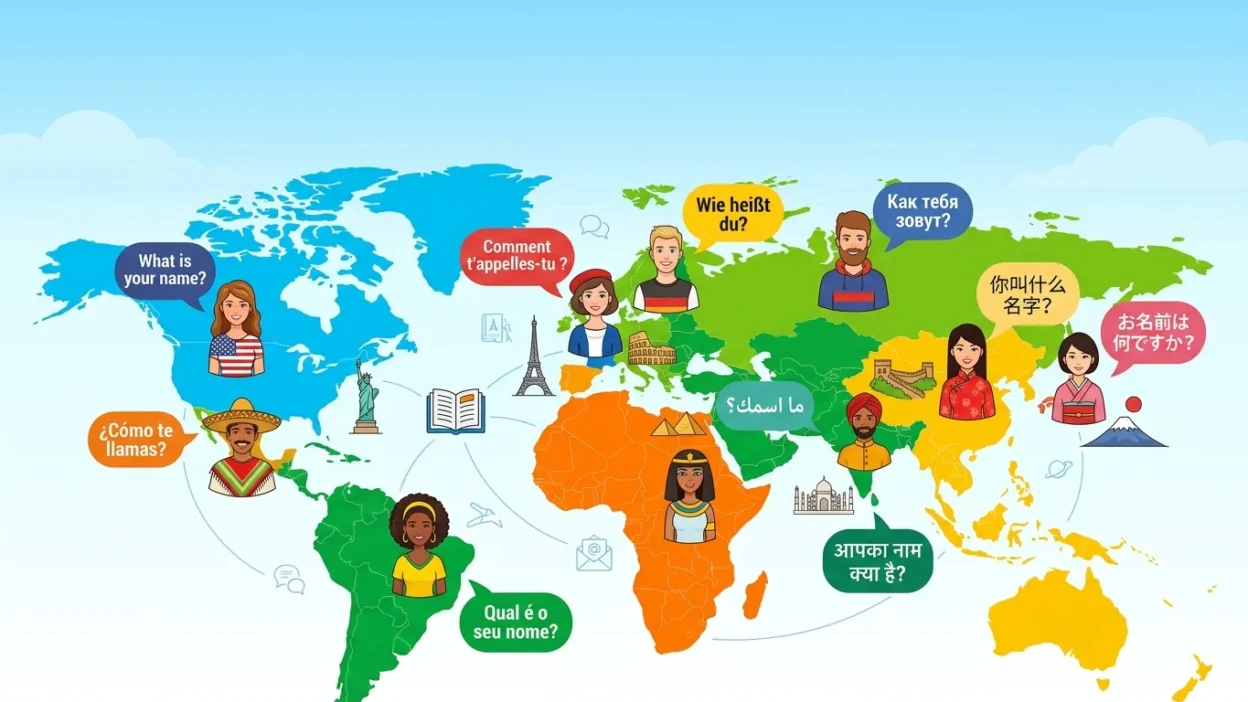
What Is Your Name in Different Languages Around the World
| Language | Native Word | Pronunciation |
| English | What is your name? | Wut iz yor naym |
| Spanish | ¿Cómo te llamas? | KOH-moh tay YAH-mahs |
| French | Comment vous appelez-vous ? | Koh-mahn voo zah-play voo |
| German | Wie heißt du? | Vee hysst doo |
| Italian | Come ti chiami? | KOH-meh tee KYAH-mee |
| Portuguese | Como você se chama? | KOH-moo voh-SEH seh SHAH-ma |
| Dutch | Hoe heet je? | Hoo hayt yuh |
| Russian | Как тебя зовут? | Kak tee-BYA za-VOOT |
| Ukrainian | Як тебе звати? | Yak te-BEH ZVA-ty |
| Polish | Jak masz na imię? | Yak mash na EE-myeh |
| Czech | Jak se jmenuješ? | Yak seh YEH-men-oo-yesh |
| Slovak | Ako sa voláš? | AH-koh sa VO-lash |
| Hungarian | Hogy hívnak? | Hodj HEEV-nok |
| Romanian | Cum te cheamă? | Koom teh KYAH-ma |
| Greek | Πώς σε λένε; | Pos se LEH-neh |
| Turkish | Adın ne? | AH-dun neh |
| Arabic | ما اسمك؟ | Ma ismuka |
| Hebrew | מה שמך? | Mah shim-kha |
| Persian | اسم شما چیست؟ | Esm-e shoma chist |
| Urdu | آپ کا نام کیا ہے؟ | Aap ka naam kya hai |
| Hindi | आपका नाम क्या है? | Aap ka naam kya hai |
| Bengali | আপনার নাম কী? | Apnar nam ki |
| Punjabi | ਤੁਹਾਡਾ ਨਾਮ ਕੀ ਹੈ? | Tuhada naam kee hai |
| Gujarati | તમારું નામ શું છે? | Tamaru naam shu chhe |
| Marathi | तुमचं नाव काय आहे? | Tumcha naav kaay aahe |
| Tamil | உங்கள் பெயர் என்ன? | Ungal peyar enna |
| Telugu | మీ పేరు ఏమిటి? | Mee peru emiti |
| Kannada | ನಿಮ್ಮ ಹೆಸರು ಏನು? | Nimma hesaru enu |
| Malayalam | നിങ്ങളുടെ പേര് എന്താണ്? | Ningalude per enthaan |
| Sinhala | ඔබගේ නම කුමක්ද? | Obage nama kumakda |
| Nepali | तपाईंको नाम के हो? | Tapainko naam ke ho |
| Chinese (Mandarin) | 你叫什么名字? | Nee jiao shen me ming zi |
| Japanese | お名前は何ですか? | O-na-mae wa nan desu ka |
| Korean | 이름이 뭐예요? | Ee-reum-ee mwo-ye-yo |
| Vietnamese | Bạn tên là gì? | Ban ten la zi |
| Thai | คุณชื่ออะไร | Khun cheu a-rai |
| Indonesian | Siapa nama Anda? | See-ah-pa nama Anda |
| Malay | Siapa nama awak? | See-ah-pa nama ah-wak |
| Filipino | Ano ang pangalan mo? | Ah-no ang pa-ngah-lan mo |
| Swahili | Jina lako nani? | Jee-na LA-ko NA-ni |
| Zulu | Ungubani igama lakho? | Oon-goo-BA-ni ee-GAH-ma LA-kho |
| Afrikaans | Wat is jou naam? | Vut is yo naam |
| Danish | Hvad hedder du? | Vel HETH-er doo |
| Swedish | Vad heter du? | Va HAY-ter doo |
| Norwegian | Hva heter du? | Hva HAY-ter doo |
| Finnish | Mikä sinun nimesi on? | Mee-ka see-noon NEE-me-see on |
| Icelandic | Hvað heitir þú? | Kvath HAY-teer thoo |
| Irish | Cad is ainm duit? | Kad ish AN-im ditch |
| Welsh | Beth yw dy enw? | Beth oo dee EN-oo |
| Basque | Nola deitzen zara? | No-la day-it-sen za-ra |
Why Learn “What Is Your Name” in Different Languages?
Learning how to ask someone’s name is one of the first steps toward meaningful communication. It helps break the ice and creates a friendly atmosphere, regardless of where you are.
This simple phrase is useful during travel, business meetings, online conversations, and language exchanges. It also demonstrates curiosity about other cultures and encourages positive interactions. Since introductions happen almost everywhere, mastering this question provides immediate practical value and increases your confidence when speaking a new language.
Cultural Importance of Asking Someone’s Name
Names carry deep cultural and personal significance across the world. Asking for someone’s name politely shows respect and interest in their identity.
Some cultures prefer formal introductions before using first names, while others encourage casual conversations immediately. Understanding local customs helps you avoid misunderstandings and makes conversations smoother. Learning these cultural differences is just as important as memorizing the words themselves.
Pronunciation Tips for Better Communication
Correct pronunciation makes your question easier to understand and shows genuine effort. Even if your grammar is not perfect, clear pronunciation often leads to successful communication.
Listen carefully to native speakers whenever possible. Repeat the phrase several times, paying attention to rhythm and stress. Practicing slowly before speaking naturally improves accuracy and builds confidence over time.
Common Situations to Use This Question
You can use this phrase whenever you meet someone for the first time. It works well during travel, school, business events, cultural exchanges, and online communities.
Introducing yourself before asking the question creates a more natural conversation. A friendly smile and respectful tone also make interactions more comfortable, especially when communicating across different cultures.
Related Greetings to Learn Together
Learning this question alongside common greetings creates complete introductions. Simple phrases like “Hello,” “Nice to meet you,” “How are you?” and “Thank you” make conversations flow naturally.
When you combine greetings with introductions, you can continue talking instead of stopping after learning someone’s name. This approach helps build stronger communication skills while expanding your vocabulary efficiently.
Easy Ways to Remember Different Translations
Instead of memorizing all languages at once, focus on a few each week. Group languages by region or language family to recognize similarities more easily.
Flashcards, daily practice, and speaking aloud improve long-term memory. Watching videos, listening to native speakers, and practicing with language partners also help reinforce pronunciation and understanding without making learning overwhelming.
Common Mistakes to Avoid
One common mistake is translating word for word without considering local grammar. Languages often organize sentences differently, so direct translations may sound unnatural.
Another mistake is ignoring pronunciation. Even a correctly translated phrase can confuse listeners if spoken incorrectly. Practice politely, speak slowly, and remain patient while learning. Most people appreciate sincere efforts to communicate in their language.
Benefits of Learning Different Languages
Learning languages improves memory, communication, and cultural awareness. Even mastering basic phrases helps you connect with people from different backgrounds.
Knowing how to ask someone’s name opens the door to meaningful conversations. It boosts confidence while traveling, studying abroad, or working internationally. Every new phrase learned contributes to stronger language skills and greater appreciation of global diversity.
Interesting Facts About Names Around the World
Different cultures have unique naming traditions. Some countries place the family name before the given name, while others use multiple surnames or honorific titles.
Many languages also have formal and informal ways to address people depending on age, relationship, or social setting. Understanding these traditions helps you communicate respectfully and appreciate the rich diversity of cultures worldwide.
Key Takeaways
- Learning basic introductions improves communication worldwide.
- Asking someone’s name politely shows respect and friendliness.
- Correct pronunciation increases understanding and confidence.
- Cultural awareness makes conversations more meaningful.
- Practicing regularly helps you remember phrases more effectively.
Conclusion
Learning what is your name in different languages is a simple yet valuable step toward better global communication. Whether you are traveling, studying, working, or simply exploring new cultures, this essential phrase helps create meaningful first impressions. By practicing pronunciation, understanding cultural customs, and using the translations regularly, you can confidently introduce yourself and connect with people from around the world. Every new language you learn opens opportunities for friendship, cultural appreciation, and lifelong learning.
Frequently Asked Questions
1. Why should I learn what is your name in different languages?
Learning this phrase helps you start conversations naturally with people from different cultures. It improves communication skills, builds confidence during travel, and demonstrates respect for local languages and traditions. Since introductions happen daily, it is one of the most practical phrases to master.
2. Is pronunciation more important than perfect grammar?
Yes. Clear pronunciation often matters more than perfect grammar when asking someone’s name. Native speakers usually appreciate your effort and can understand your meaning even if your grammar is not completely accurate. Regular listening and speaking practice improve pronunciation quickly.
3. Which languages should beginners learn first?
Beginners should start with languages they are most likely to use, such as Spanish, French, German, Mandarin Chinese, or Japanese. Choosing languages connected to your travel plans, education, or career goals makes learning more enjoyable and practical.
4. Can this phrase be used in formal situations?
Yes. Many languages have formal versions for speaking respectfully with strangers, elders, or professionals. Learning both formal and informal expressions helps you communicate appropriately in different social and professional situations while avoiding unintended disrespect.
5. What is the best way to remember these translations?
Practice a few languages at a time instead of memorizing all of them together. Use flashcards, pronunciation exercises, language apps, and daily conversations. Repetition combined with real life practice helps improve both memory and speaking confidence.

Brooklyn Walker is a contemporary writer known for engaging storytelling, memorable characters, and emotionally rich narratives. Their work inspires readers through creativity, imagination, meaningful themes, and compelling literary style.