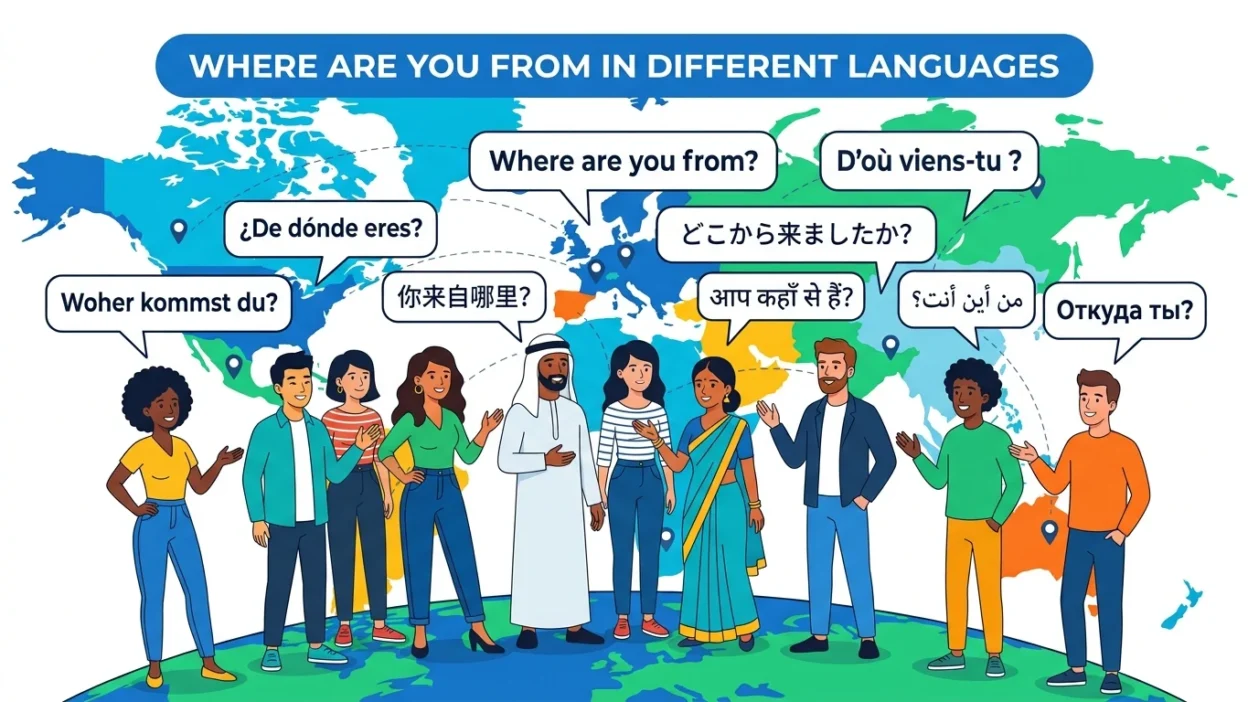
Knowing where are you from in different languages is a valuable communication skill that helps you start friendly conversations while traveling, studying, or meeting people from different cultures. This simple question creates meaningful connections and shows genuine interest in someone’s background.
Learning where are you from in different languages also improves your language skills and cultural awareness. Whether you’re a language learner, traveler, or simply curious about global expressions, this guide covers translations, pronunciation, pronunciation tips, and practical usage to help you communicate confidently.
Quick Answer
Where are you from in different languages can be expressed in many ways depending on the language. Although the wording varies, the meaning remains the same: politely asking someone about their country, city, or place of origin during a conversation.
Where Are You From in Different Languages Around the World
| Language | Native Word | Pronunciation |
| English | Where are you from? | Wair ar yoo from |
| Spanish | ¿De dónde eres? | Deh DON-deh EH-res |
| French | D’où viens-tu ? | Doo vee-an too |
| German | Woher kommst du? | Vo-hair komst doo |
| Italian | Di dove sei? | Dee DO-vay say |
| Portuguese | De onde você é? | Jee ON-je vo-SE eh |
| Dutch | Waar kom je vandaan? | Vaar kom yuh van-DAAN |
| Russian | Откуда ты? | At-KOO-da ty |
| Ukrainian | Звідки ти? | ZVEED-ky ty |
| Polish | Skąd jesteś? | Skond yes-TESH |
| Czech | Odkud jsi? | ODT-kood si |
| Slovak | Odkiaľ si? | ODT-kee-al si |
| Hungarian | Honnan jöttél? | HON-nan yut-tail |
| Romanian | De unde ești? | Deh OON-de ehsht |
| Greek | Από πού είσαι; | Apo poo EE-se |
| Turkish | Nerelisin? | Ne-re-LEE-sin |
| Arabic | من أين أنت؟ | Min AYN an-ta |
| Hebrew | מאיפה אתה? | Meh-EY-fo a-TA |
| Persian | اهل کجا هستی؟ | Ahl-e ko-JA has-ti |
| Urdu | آپ کہاں سے ہیں؟ | Aap ka-HAN say hain |
| Hindi | आप कहाँ से हैं? | Aap ka-HAN se hain |
| Bengali | আপনি কোথা থেকে এসেছেন? | Aap-ni KO-tha the-ke |
| Punjabi | ਤੁਸੀਂ ਕਿੱਥੋਂ ਹੋ? | Tu-see KIT-thon ho |
| Gujarati | તમે ક્યાંના છો? | Ta-may KYAN-na cho |
| Marathi | तुम्ही कुठले आहात? | Tu-mhee KUTH-lay aa-hat |
| Tamil | நீங்கள் எங்கிருந்து வந்தீர்கள்? | Neengal engirunthu vandheergal |
| Telugu | మీరు ఎక్కడి వారు? | Meeru ek-ka-di vaaru |
| Kannada | ನೀವು ಎಲ್ಲಿಂದ ಬಂದಿದ್ದೀರಿ? | Neevu ellinda bandiddiri |
| Malayalam | നിങ്ങൾ എവിടെയാണ് നിന്ന്? | Ningal evidunnu |
| Sinhala | ඔබ කොහෙන්ද? | Oba ko-HEN-da |
| Nepali | तपाईं कहाँबाट हुनुहुन्छ? | Ta-pa-ee ka-HAN-bat |
| Chinese (Simplified) | 你来自哪里? | Nee lai-zuh na-lee |
| Japanese | どこから来ましたか? | Doko kara kimashita ka |
| Korean | 어디에서 오셨어요? | O-di-e-so o-shyo-so-yo |
| Thai | คุณมาจากที่ไหน | Khun ma jak tee nai |
| Vietnamese | Bạn đến từ đâu? | Ban den tu dau |
| Indonesian | Dari mana asalmu? | Da-ree ma-na a-sal-mu |
| Malay | Dari mana kamu? | Da-ree ma-na ka-moo |
| Filipino | Taga saan ka? | Ta-ga sa-an ka |
| Swahili | Unatoka wapi? | Oo-na-TO-ka WA-pi |
| Afrikaans | Waar kom jy vandaan? | Vaar kom yay fan-daan |
| Zulu | Uvelaphi? | Oo-veh-LA-phee |
| Xhosa | Uvela phi? | Oo-VE-la pee |
| Yoruba | Nibo lo ti wa? | Nee-bo lo tee wa |
| Igbo | Ebee ka i si? | Eh-BEH ka ee see |
| Hausa | Daga ina kake? | Da-ga EE-na ka-kay |
| Finnish | Mistä olet kotoisin? | MIS-ta o-let ko-toi-sin |
| Swedish | Var kommer du ifrån? | Var KOM-er doo ee-fron |
| Norwegian | Hvor kommer du fra? | Vor KOM-mer doo fra |
| Danish | Hvor kommer du fra? | Vor KOM-er doo fra |
| Icelandic | Hvaðan ert þú? | KVA-than ert thu |
Why Learn “Where Are You From” in Different Languages?
Learning this question helps you build conversations naturally with people from different backgrounds. It is often one of the first questions exchanged during introductions, making it an essential phrase for travelers, students, and professionals.
Knowing how to ask it respectfully also demonstrates cultural appreciation. Native speakers usually appreciate the effort, even if your pronunciation is not perfect. It creates a welcoming atmosphere and encourages meaningful conversations.
Cultural Significance of Asking Someone’s Origin
In many cultures, asking where someone is from is a friendly way to learn about their background. It often leads to discussions about traditions, food, languages, and customs.
However, cultural expectations differ. Some people may answer with their country, while others may mention their hometown or region. Understanding these differences helps you ask the question politely and interpret responses correctly.
Pronunciation Tips for Better Communication
Pronunciation matters because it helps native speakers understand you more easily. Listen carefully to native pronunciation and repeat phrases several times until they feel natural.
Practice slowly before increasing your speaking speed. Focus on the rhythm and stress of each language rather than translating every word. Consistent practice builds confidence over time.
Related Greetings and Useful Questions
Once you ask where someone is from, you can continue the conversation with simple follow-up questions. Useful expressions include “What is your name?”, “Do you speak English?”, “Nice to meet you,” and “How are you?”
Learning related greetings allows conversations to flow naturally. These common expressions help you communicate more comfortably with native speakers and create lasting impressions.
Practical Uses in Daily Life
This phrase is useful in airports, schools, international workplaces, language exchanges, and travel destinations. It helps you connect with people from around the world in everyday situations.
Language learners also use it during online conversations and cultural exchange programs. Mastering basic conversation starters makes communication easier and more enjoyable.
Common Mistakes to Avoid
One common mistake is translating the phrase word for word between languages. Every language has unique grammar and sentence structures, so literal translations may sound unnatural.
Another mistake is using informal versions in formal situations. Learn both polite and casual forms whenever possible to communicate respectfully with different audiences.
When Should You Use This Question?
The best time to ask this question is during introductions or casual conversations after greeting someone. It is commonly used when meeting new classmates, coworkers, travelers, or language partners.
Avoid asking immediately in situations where personal information may feel sensitive. Building a little rapport first often makes the conversation more comfortable and natural.
Easy Ways to Remember Different Translations
Group languages by region and practice a few phrases every day instead of trying to memorize dozens at once. Flashcards and repetition are excellent learning methods.
Speaking aloud while reading translations improves memory significantly. Reviewing the phrases regularly helps you retain them for long-term use in real conversations.
Benefits of Learning Different Languages
Learning languages expands your understanding of cultures and improves communication skills. Even mastering a few common questions can increase confidence when meeting international friends or colleagues.
It also strengthens memory, enhances problem-solving abilities, and opens opportunities for travel, education, and career growth. Every new phrase learned brings you closer to meaningful global connections.
Key Takeaways
- Learning “where are you from” helps start conversations worldwide.
- Different languages use unique sentence structures for the same question.
- Correct pronunciation improves understanding and confidence.
- Cultural awareness makes conversations more respectful.
- Regular practice helps you remember translations more effectively.
Conclusion
Learning where are you from in different languages is an excellent way to improve communication and connect with people from diverse cultures. Whether you are traveling, studying, or simply exploring new languages, this common question helps break the ice and encourages meaningful conversations. By practicing pronunciation, understanding cultural differences, and learning related greetings, you can communicate with greater confidence and build lasting friendships across the world.
Frequently Asked Questions
1. Why should I learn “where are you from” in different languages?
Learning this phrase helps you start conversations naturally with people from different countries. It is one of the most commonly used introductory questions and demonstrates respect for other cultures while improving your communication skills during travel, work, or language learning.
2. Is this question considered polite everywhere?
Generally, yes. However, cultural expectations vary between countries. Some people may prefer sharing their city instead of their country, while others may wait until they know you better. Always ask politely and respect personal boundaries.
3. How can I improve my pronunciation?
Listen to native speakers, repeat the phrase multiple times, and practice speaking slowly before increasing your speed. Recording yourself and comparing your pronunciation with native examples can also improve accuracy and confidence.
4. What should I ask after someone answers?
You can continue by asking about their hometown, language, favorite foods, or travel experiences. Simple follow-up questions help maintain a natural conversation and show genuine interest in the person’s culture and background.
5. How long does it take to learn common phrases in multiple languages?
Most learners can remember essential conversational phrases with consistent daily practice. Spending just 10 to 15 minutes each day reviewing translations and pronunciations can produce noticeable progress within a few weeks.

Everly Bennett is recognized for imaginative storytelling and heartfelt writing. Their books explore relationships, resilience, and hope, delivering memorable reading experiences that resonate with audiences across generations.