
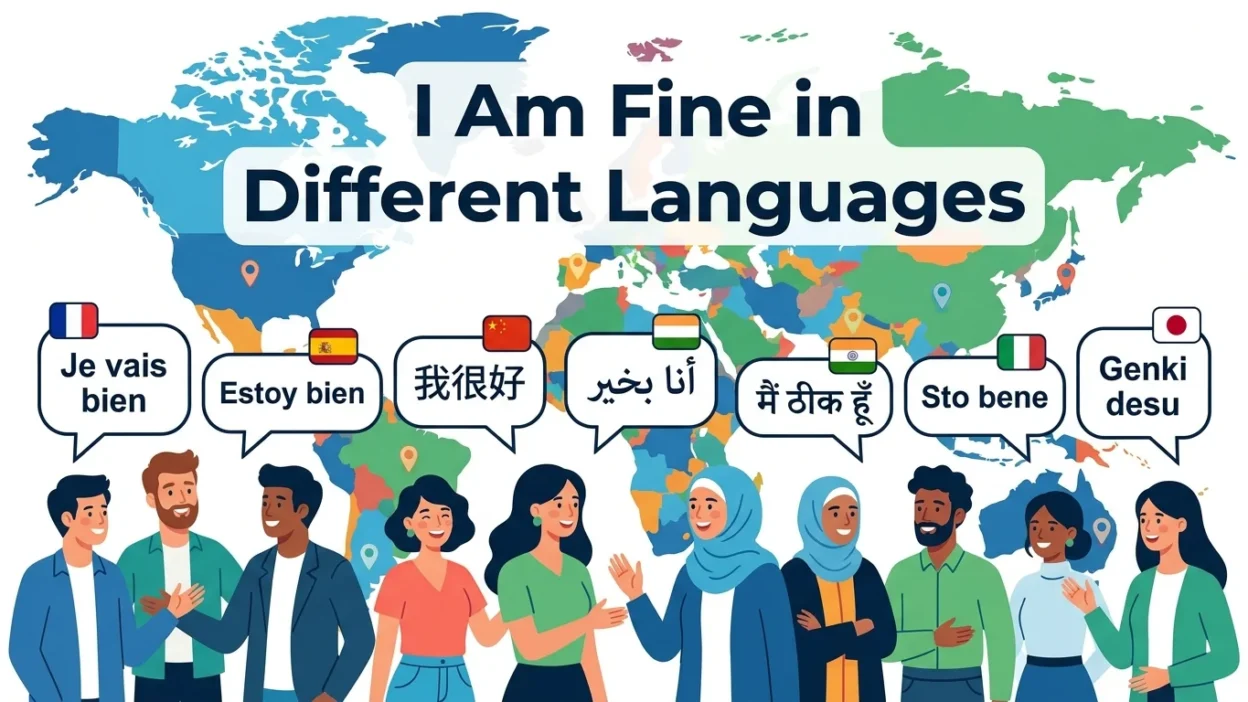
Learning how to say i am fine in different languages is one of the easiest ways to start sounding natural in conversation. It helps you respond politely, show respect, and connect with people across cultures while building confidence fast.
This guide on i am fine in different languages gives you clear translations, simple pronunciations, and practical tips for everyday use. Whether you are traveling, meeting new people, or studying languages, these phrases make communication warmer and more confident every day, especially in first impressions and can turn a basic reply into a friendly, memorable exchange almost anywhere you go today.
Quick Answer
“I am fine” changes by language, but the meaning is usually similar: a polite way to say you are okay, healthy, or feeling well. This guide gives common translations, easy pronunciations, and practical usage tips for everyday conversation.
i am fine in different languages Around the World
| Language | Native Word | Pronunciation |
| English | I am fine | eye am fine |
| Arabic | أنا بخير | ana bikhair |
| Bengali | আমি ভালো আছি | aami bhalo achhi |
| Chinese (Mandarin) | 我很好 | wǒ hěn hǎo |
| Croatian | Dobro sam | doh-broh sahm |
| Czech | Mám se dobře | maam se doh-brzhe |
| Danish | Jeg har det godt | yay har de godt |
| Dutch | Ik ben in orde | ik ben in OR-duh |
| Filipino (Tagalog) | Mabuti naman ako | ma-BOO-tee na-MAN a-koh |
| Finnish | Olen kunnossa | OH-len KOON-oss-ah |
| French | Je vais bien | zhuh vay byan |
| German | Mir geht es gut | meer gate es goot |
| Greek | Είμαι καλά | EE-meh ka-LA |
| Gujarati | હું ઠીક છું | hoon theek choo |
| Hindi | मैं ठीक हूँ | main theek hoon |
| Hungarian | Jól vagyok | yohl va-yok |
| Indonesian | Saya baik-baik saja | SA-ya bye-bye SA-ja |
| Italian | Sto bene | stoh beh-neh |
| Japanese | 元気です | gen-kee des |
| Kannada | ನಾನು ಚೆನ್ನಾಗಿದ್ದೇನೆ | naa-noo chen-naa-gi-deh-ne |
| Korean | 괜찮아요 | gwaen-chan-a-yo |
| Lao | ຂ້ອຍສະບາຍດີ | khoy sa-bai-dee |
| Malay | Saya sihat | SA-ya see-hat |
| Marathi | मी ठीक आहे | mee theek aahe |
| Burmese | ကျွန်တော်နေကောင်းပါတယ် | kyaun-taw nay-kaung ba-deh |
| Nepali | म ठिक छु | ma thik chu |
| Norwegian | Jeg har det bra | yay har de bra |
| Persian | من خوبم | man khoo-bam |
| Polish | Mam się dobrze | mam sheng do-bzhe |
| Portuguese | Estou bem | es-TOH baym |
| Punjabi | ਮੈਂ ਠੀਕ ਹਾਂ | main theek haan |
| Romanian | Sunt bine | soont bee-neh |
| Russian | Я в порядке | ya v pa-ryad-ke |
| Serbian | Добро сам | do-bro sam |
| Sinhala | මම හොඳින් | ma-ma ho-n-din |
| Spanish | Estoy bien | es-TOY byen |
| Swedish | Jag mår bra | yahg mor brah |
| Swahili | Niko sawa | NEE-koh SA-wah |
| Tamil | நான் நன்றாக இருக்கிறேன் | naan nan-draah iruk-kiren |
| Telugu | నేను బాగున్నాను | nenu baagunnanu |
| Thai | สบายดี | sa-baai-dee |
| Turkish | İyiyim | ee-yee-im |
| Ukrainian | Я в порядку | ya v po-ryad-koo |
| Urdu | میں ٹھیک ہوں | main theek hoon |
| Vietnamese | Tôi ổn | toy on |
| Xhosa | Ndiphilile | ndi-pee-lee-le |
| Zulu | Ngiphilile | nee-pee-lee-le |
| Afrikaans | Ek is oukei | ek is ow-kay |
| Hebrew | אני בסדר | ah-nee beh-seh-der |
| Amharic | ደህና ነኝ | deh-hna neng |
Why This Phrase Matters in Daily Conversation
A simple reply like “I am fine” does more than share your mood. It signals politeness, confidence, and social ease. In many cultures, this is one of the first phrases people hear in daily greetings, so learning it early helps you sound prepared.
It also opens the door to richer conversation. Once you know how to answer “How are you?” naturally, you can move on to asking the same question back, showing interest, and keeping the exchange flowing. That small step can make a big difference when you meet new people, travel, or study another language.
Cultural Meaning Behind a Simple Reply
The meaning of “fine” is not identical everywhere. Some languages use a phrase that means “I am well,” while others prefer “I am okay” or “I am doing good.” That difference matters because direct translations can sound too formal, too casual, or slightly unnatural.
Cultural context matters too. In some places, people expect a warm, detailed response. In others, a short answer is perfectly normal. Learning the phrase in each language helps you choose the version that feels respectful, natural, and socially comfortable in real conversations.
Pronunciation Tips for Clear Speech
Pronunciation is where learners often gain confidence fastest. Focus on stress, vowel length, and rhythm instead of trying to speak too quickly. Short, clear sounds usually work better than forcing a perfect accent.
A useful method is to break each phrase into small chunks and repeat it aloud three times. Listen for common patterns, such as “ee,” “ah,” or “oo” sounds, and match them as closely as possible. If a language uses a different alphabet, use the pronunciation guide as a bridge, then practice until the phrase feels automatic.
Useful Related Replies and Greetings
Once you know how to say you are fine, learn a few related greetings. “Hello,” “How are you?” and “Nice to meet you” help you keep the same conversation going naturally. These phrases are especially useful because they create a complete social response, not just a standalone line.
You can also learn short follow-up replies such as “thank you,” “and you?” or “I’m doing well.” Together, these small expressions build a practical starter pack for travel, language study, and everyday introductions. The more connected phrases you know, the easier conversation becomes.
Practical Situations to Use the Phrase
This phrase is useful in airports, hotels, classrooms, offices, and video calls. It is one of the safest responses when someone checks on you, because it is neutral, polite, and easy to remember. Even beginners can use it confidently without sounding awkward.
It is also helpful when you do not want to share too much personal detail. A simple “I am fine” keeps the conversation friendly while giving you time to think about what to say next. That makes it a practical phrase for both casual and formal situations.
Easy Ways to Memorize Translations
The fastest way to memorize multiple translations is to group them by sound or script. For example, compare phrases that begin with “I,” “I’m,” or “I am,” then practice the ones that feel most similar. Repetition works better when it is short and spaced out.
You can also use flashcards, voice notes, or a daily 2-minute review. Say the phrase aloud, cover the answer, and test yourself. When you connect the word to a real situation, the memory becomes stronger and more useful. Small daily practice beats one long study session.
Common Mistakes to Avoid
A common mistake is assuming every language uses the exact same structure as English. Some expressions are more natural when translated as “I am okay” or “I am well.” Another mistake is copying the spelling without learning the pronunciation.
Learners also overthink perfection. In real conversations, clarity matters more than flawless accent. A simple, respectful reply is usually enough. Start with the most common version, practice it in context, and avoid using a phrase that sounds too formal unless the situation calls for it. Natural delivery is the goal.
Benefits of Learning Phrases Across Languages
Learning this phrase in multiple languages gives you more than vocabulary. It trains your ear, improves memory, and builds cultural awareness. You begin to notice how different languages express the same idea with different sounds and structures.
That awareness makes learning future phrases easier. Once you recognize patterns, you can guess meaning more quickly and speak with more confidence. It also shows respect for the people you meet, which often leads to warmer, more memorable conversations. Small language skills can create surprisingly big social benefits.
Key Takeaways
- “I am fine” can be translated in many natural ways, depending on the language.
- Pronunciation matters as much as spelling when speaking a new phrase.
- Cultural context can change which version sounds most natural.
- Related greetings help you keep conversations flowing smoothly.
- Regular practice makes these translations easier to remember and use.
Conclusion
Knowing how to say i am fine in different languages is a small skill with a big payoff. It helps you respond politely, understand local speech, and build trust in simple everyday moments. With the translations, pronunciations, and tips in this guide, you can use the phrase naturally across cultures. The more you practice, the easier it becomes to recognize patterns and speak with confidence. Even one friendly reply can make your conversations feel more personal and memorable right away.
Frequently Asked Questions
1. What does “I am fine” mean in different languages?
It depends on the language, but the meaning is usually similar: a polite way to say you are okay, healthy, or feeling well. Some languages use a word closer to “well,” while others prefer “okay” or “good.” Context helps you choose the most natural version.
2. Is it useful to learn “I am fine” in multiple languages?
Yes, especially when you want to sound more natural in basic conversation. Simple greetings are often the first phrases people notice, and using them correctly shows respect. They are also useful for travel, introductions, and everyday social exchanges with native speakers.
3. How can I remember the pronunciations easily?
Pronunciation is easiest when you divide the phrase into small parts and repeat it slowly. Focus on stress and vowel sounds, then listen to native speakers when possible. A pronunciation guide helps, but speaking aloud is what makes the phrase stick.
4. Are direct translations always natural?
In some cases, yes. Many languages use a reply that means “I am well” or “I am okay,” which can sound more natural than a direct translation. The best choice depends on local speech habits, formality, and how people usually answer greetings.
5. When should I use this phrase?
Use it when someone asks how you are, when starting a conversation, or when you need a safe, polite response. It works well in casual and formal settings, especially if you want to keep things friendly without sharing too much detail.

Emery Foster writes captivating stories that blend emotion, adventure, and thoughtful themes. Their creative voice, relatable characters, and engaging plots have attracted readers from diverse backgrounds worldwide.