
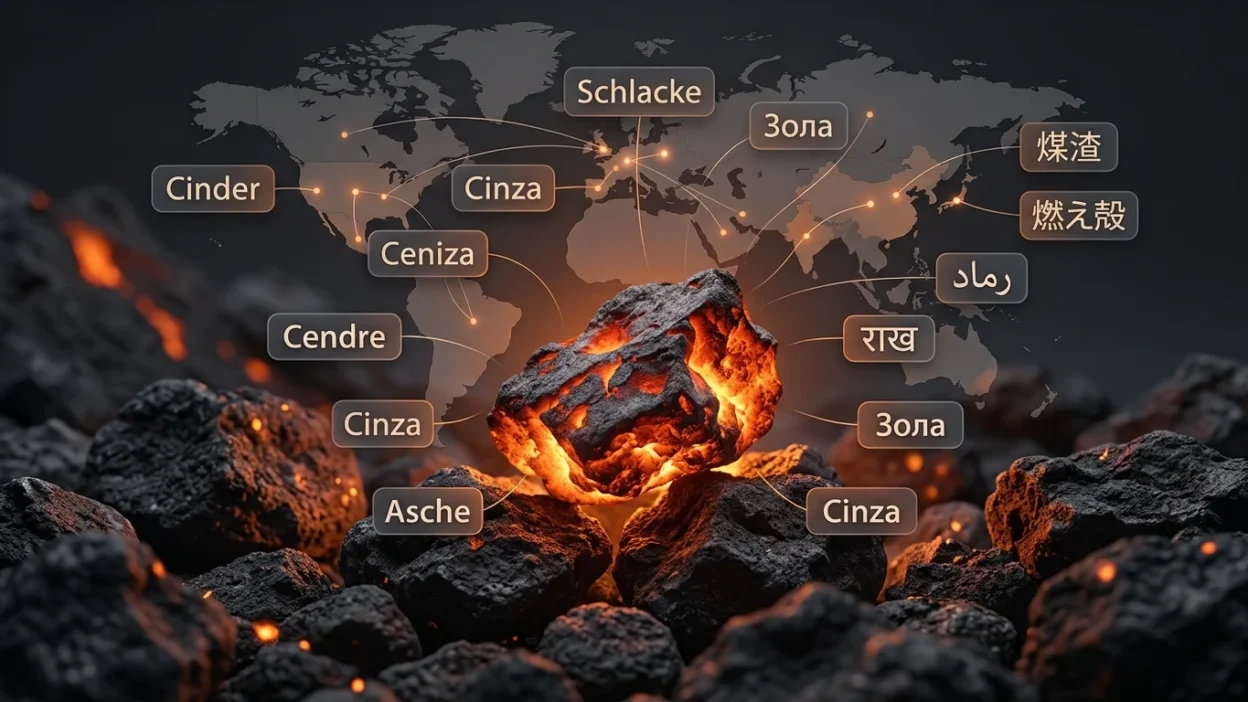
Cinder in different languages is a fascinating topic for language learners, travelers, writers, and anyone interested in global vocabulary. The word “cinder” usually refers to a small piece of partly burned coal, wood, or another material left after a fire. Learning cinder in different languages helps you understand how different cultures describe fire, ashes, and related natural elements.
Whether you’re expanding your vocabulary, translating documents, or exploring foreign languages, knowing cinder in different languages improves communication and cultural awareness. This guide includes translations, pronunciation tips, practical uses, and interesting facts to help you confidently use this useful word.
Quick Answer
The phrase cinder in different languages refers to the translation of the word “cinder” across multiple languages. While many languages have unique terms for burnt remains, the meaning generally describes small, partially burned pieces of wood, coal, or similar materials left after combustion.
Cinder Around the World
| Language | Native Word | Pronunciation |
| English | Cinder | SIN-der |
| Spanish | Escoria | es-KOR-ee-ah |
| French | Cendre | SAN-dr |
| German | Schlacke | SHLAK-uh |
| Italian | Cenere | CHEH-neh-reh |
| Portuguese | Escória | es-KOH-ree-ah |
| Dutch | Sintel | SIN-tel |
| Swedish | Slagg | SLAG |
| Norwegian | Slagg | SLAG |
| Danish | Slagge | SLAG-eh |
| Finnish | Kuona | KWOH-nah |
| Icelandic | Gjall | GYATL |
| Polish | Żużel | ZHOO-zhel |
| Czech | Struska | STROOS-kah |
| Slovak | Troska | TROS-kah |
| Hungarian | Salak | SHAH-lak |
| Romanian | Zgură | ZGOO-ruh |
| Bulgarian | Шлака | SHLA-ka |
| Serbian | Шљака | SHLYA-ka |
| Croatian | Troska | TROS-kah |
| Slovenian | Žlindra | ZHLIN-drah |
| Russian | Шлак | SHLAK |
| Ukrainian | Шлак | SHLAK |
| Belarusian | Шлак | SHLAK |
| Greek | Σκωρία | sko-REE-ah |
| Turkish | Cüruf | JU-ruf |
| Arabic | خبث | KHABTH |
| Hebrew | סיג | SEEG |
| Persian | سرباره | sar-BAH-reh |
| Urdu | راکھ کا ٹکڑا | raakh ka tuk-ra |
| Hindi | सिंडर | SIN-der |
| Bengali | সিন্ডার | SIN-dar |
| Punjabi | ਸਿੰਡਰ | SIN-dar |
| Gujarati | સિન્ડર | SIN-der |
| Marathi | सिंडर | SIN-der |
| Tamil | சிண்டர் | SIN-dar |
| Telugu | సిండర్ | SIN-der |
| Kannada | ಸಿಂಡರ್ | SIN-der |
| Malayalam | സിണ്ടർ | SIN-dar |
| Chinese (Simplified) | 煤渣 | may-JAH |
| Japanese | 燃え殻 | mo-eh-GAH-rah |
| Korean | 잿더미 | jet-DEO-mi |
| Vietnamese | Than xỉ | tan SEE |
| Thai | ขี้เถ้า | kee-TAO |
| Indonesian | Terak | TEH-rak |
| Malay | Terak | TEH-rak |
| Filipino | Abo | AH-boh |
| Swahili | Majivu | ma-JEE-voo |
| Afrikaans | Sintel | SIN-tel |
| Latin | Cinis | KEE-nis |
What Does the Word Cinder Mean?
The word “cinder” refers to the hard, partially burned remains of combustible materials such as wood or coal. Unlike fine ash, cinders are larger, darker, and often retain their rough texture after a fire.
The term appears in everyday conversation, literature, construction, geology, and even gardening. Understanding its exact meaning helps avoid confusion with similar words like ash, soot, charcoal, and slag, each of which has a distinct definition.
Why Learn Cinder in Different Languages?
Learning cinder in different languages expands your vocabulary while improving your understanding of environmental, industrial, and everyday terminology. Many translation projects, travel experiences, and educational materials include words related to nature and fire.
Knowing these translations is also valuable for students, interpreters, researchers, and multilingual professionals. Even a specialised word like “cinder” can appear in books, scientific articles, historical texts, and conversations about volcanic landscapes or fireplaces.
Cultural Significance of Cinders
Across cultures, cinders often symbolise endings, transformation, resilience, and renewal. Fire has long represented destruction followed by new beginnings, making cinders powerful literary and cultural symbols.
Many traditional stories, poems, and myths use cinders to represent memories of past events or the foundation for future growth. Although the symbolism varies between cultures, the connection between fire and change remains remarkably consistent around the world.
How to Pronounce Cinder in Different Languages
Pronunciation varies significantly depending on each language’s sound system. European languages often use similar consonant patterns, while Asian and Middle Eastern languages may feature completely different sounds.
Listening to native speakers and practising slowly improves pronunciation. Breaking each word into syllables and repeating them several times helps learners gain confidence. Consistent practice is far more effective than trying to memorise every pronunciation at once.
Practical Uses of the Word Cinder
The word “cinder” appears in many real-life situations. It is commonly used when discussing fireplaces, campfires, volcanoes, construction materials, railway history, and industrial waste.
Writers also use the word metaphorically to describe fading memories, destroyed objects, or the aftermath of dramatic events. Understanding these practical contexts helps learners recognise when “cinder” is being used literally or figuratively.
Common Mistakes When Translating Cinder
One common mistake is confusing “cinder” with “ash.” Ash consists of fine powder left after complete combustion, while cinders are larger, partially burned fragments.
Another error is translating the word as charcoal or slag without considering context. Since some languages use different words depending on industrial or natural settings, choosing the correct translation requires understanding the sentence rather than translating word for word.
Easy Tips to Remember Cinder in Different Languages
Learning fifty translations can seem challenging, but using simple memory techniques makes the process easier. Group languages by region, create flashcards, and practise a few words each day instead of studying everything at once.
Speaking the words aloud, writing short example sentences, and reviewing them regularly strengthens long-term memory. Combining pronunciation with visual association also improves vocabulary retention considerably.
Benefits of Learning Vocabulary Across Languages
Learning specialised vocabulary like “cinder” broadens your overall language skills. It strengthens reading comprehension, improves translation accuracy, and increases confidence when communicating internationally.
A diverse vocabulary also helps travellers, students, and professionals understand technical discussions, literature, and educational resources more effectively. Small vocabulary improvements accumulate over time, making language learning more rewarding and practical.
Interesting Facts About the Word Cinder
The word “cinder” has existed in English for centuries and is closely connected to historical uses of coal and wood fires. Its meaning has remained surprisingly consistent despite changes in technology and energy sources.
The term also appears in famous stories, geology, engineering, and sports. For example, “cinder tracks” once referred to running tracks made from crushed cinders before modern synthetic surfaces became common.
Key Takeaways
- Cinder refers to partially burned pieces left after combustion.
- Many languages have unique words describing cinders and burnt remains.
- Correct pronunciation improves communication and vocabulary retention.
- Context is important because cinder differs from ash, charcoal, and slag.
- Learning specialised vocabulary strengthens multilingual communication.
Conclusion
Learning cinder in different languages is an excellent way to expand your vocabulary while gaining deeper cultural and linguistic knowledge. Although the translations vary from one language to another, the core meaning remains remarkably similar worldwide. Understanding pronunciation, practical usage, and cultural significance helps learners use the word accurately in different situations. Whether you are studying languages, translating documents, or simply exploring global vocabulary, mastering cinder in different languages adds valuable knowledge to your language-learning journey.
Frequently Asked Questions
1. What does cinder mean?
A cinder is a partially burned piece of wood, coal, or another combustible material left after a fire. It is usually larger than ash and often appears dark, rough, and solid. The word is commonly used in everyday language, literature, geology, and construction.
2. Why should I learn cinder in different languages?
Learning translations for specialised words expands vocabulary and improves communication across cultures. It is especially useful for translators, students, travellers, researchers, and anyone interested in multilingual learning or understanding technical and literary texts more accurately.
3. Is cinder the same as ash?
No. Ash is the fine powder remaining after complete combustion, while cinders are larger, partially burned fragments. Although some languages may use related terms, the two words usually have different meanings depending on the context.
4. Where is the word cinder commonly used?
The word appears in discussions about fireplaces, campfires, volcanoes, industrial processes, railway history, construction materials, and literature. It can also be used metaphorically to describe the remains of something after destruction or dramatic change.
5. How can I remember cinder translations more easily?
Practise a few languages at a time using flashcards, pronunciation exercises, and simple example sentences. Reviewing vocabulary regularly and grouping languages by region makes learning easier while improving long term memory and pronunciation skills.

Brooklyn Walker is a contemporary writer known for engaging storytelling, memorable characters, and emotionally rich narratives. Their work inspires readers through creativity, imagination, meaningful themes, and compelling literary style.