
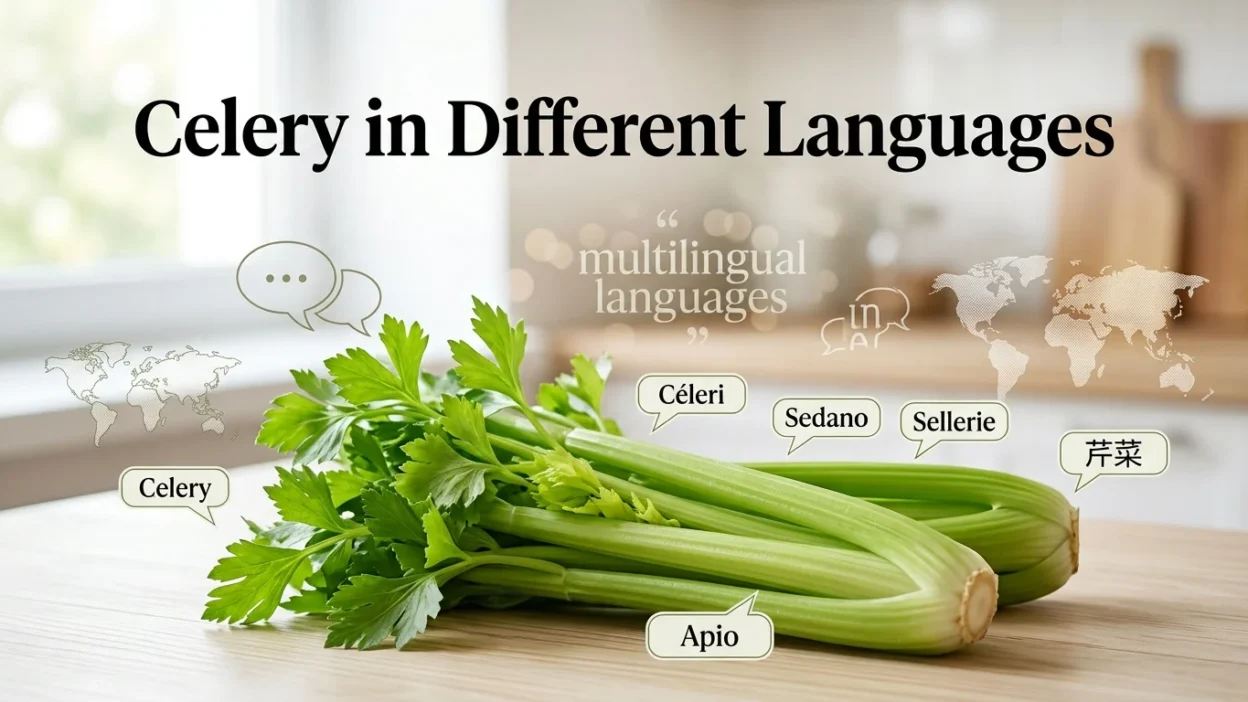
Celery in different languages is a useful topic for anyone interested in cooking, travel, language learning, or international shopping. Knowing how to say celery in different languages helps you recognize the vegetable in recipes, grocery stores, and local markets around the world.
Whether you are learning a new language or exploring global cuisines, understanding celery in different languages makes communication easier. This guide shares translations, pronunciations, practical tips, and interesting facts to help you confidently identify and use this healthy vegetable wherever you go.
Quick Answer
Celery in different languages refers to the translated names of the vegetable across the world’s languages. Learning these words helps with travel, cooking, grocery shopping, and understanding international recipes while improving everyday vocabulary.
Celery Around the World
| Language | Native Word | Pronunciation |
| English | Celery | SEL-uh-ree |
| Spanish | Apio | AH-pyo |
| French | Céleri | SAY-luh-ree |
| German | Sellerie | ZEL-leh-ree |
| Italian | Sedano | seh-DAH-no |
| Portuguese | Aipo | EYE-po |
| Dutch | Selderij | SEL-duh-rye |
| Swedish | Selleri | SEL-eh-ree |
| Norwegian | Selleri | SEL-eh-ree |
| Danish | Selleri | SEL-eh-ree |
| Finnish | Selleri | SEL-leh-ree |
| Polish | Seler | SEH-ler |
| Czech | Celer | TSEH-ler |
| Slovak | Zeler | ZEH-ler |
| Hungarian | Zeller | ZEL-ler |
| Romanian | Țelină | tseh-LEE-nuh |
| Bulgarian | Целина | tseh-LEE-na |
| Serbian | Целер | TSEH-ler |
| Croatian | Celer | TSEH-ler |
| Slovenian | Zelena | zeh-LEH-na |
| Russian | Сельдерей | syel-deh-RAY |
| Ukrainian | Селера | seh-LEH-ra |
| Belarusian | Салера | sa-LYE-ra |
| Greek | Σέλινο | SEH-lee-no |
| Turkish | Kereviz | keh-reh-VEEZ |
| Arabic | كرفس | KAR-afs |
| Hebrew | סלרי | SEL-eh-ree |
| Persian | کرفس | KAR-afs |
| Urdu | اجوائن کا ڈنٹھل | a-JWAIN ka DUN-thal |
| Hindi | अजवाइन का डंठल | a-JWAIN ka DUN-thal |
| Bengali | সেলারি | seh-LAH-ree |
| Punjabi | ਸੈਲਰੀ | SAIL-uh-ree |
| Gujarati | સેલરી | SEL-uh-ree |
| Marathi | सेलरी | SEL-uh-ree |
| Tamil | செலரி | SEL-uh-ree |
| Telugu | సెలరీ | SEL-uh-ree |
| Kannada | ಸೆಲರಿ | SEL-uh-ree |
| Malayalam | സെലറി | SEL-uh-ree |
| Chinese (Simplified) | 芹菜 | CHEEN-tsai |
| Chinese (Traditional) | 芹菜 | CHEEN-tsai |
| Japanese | セロリ | seh-ROH-ree |
| Korean | 셀러리 | SEL-luh-ree |
| Vietnamese | Cần tây | gun TIE |
| Thai | ขึ้นฉ่ายฝรั่ง | kheun-CHAI fa-RANG |
| Indonesian | Seledri | seh-LEH-dree |
| Malay | Saderi | sah-DEH-ree |
| Filipino | Kintsay | kint-SAI |
| Swahili | Seleri | seh-LEH-ree |
| Afrikaans | Seldery | SEL-duh-ree |
| Icelandic | Sellerí | SEL-leh-ree |
Why Learn Celery in Different Languages?
Learning the word for celery in multiple languages is practical and rewarding. It helps you understand recipes from different countries, communicate while traveling, and identify fresh produce in supermarkets or local markets.
It is also useful for students, chefs, nutrition enthusiasts, and language learners. Expanding your vocabulary with common food names builds confidence in everyday conversations and makes cultural experiences more enjoyable.
Cultural Importance of Celery Around the World
Celery is widely used in many traditional cuisines. European soups, Asian stir-fries, Mediterranean salads, and American recipes all include celery for its fresh flavor and crunchy texture.
Although preparation styles differ by region, the vegetable remains a familiar ingredient across cultures. Learning its local name helps you appreciate culinary traditions while making it easier to follow authentic recipes from around the world.
How to Pronounce Celery in Different Languages
Every language has unique pronunciation patterns. Some names closely resemble the English word “celery,” while others sound completely different, such as the Arabic, Turkish, or Chinese versions.
Listening to native speakers and practicing slowly improves pronunciation. Breaking each word into syllables and repeating it several times helps build confidence and makes the vocabulary easier to remember.
Related Food Words You Should Know
When learning celery in different languages, it is helpful to learn similar vegetable names as well. Words for carrots, onions, parsley, lettuce, spinach, and cabbage often appear alongside celery in recipes.
Building related vocabulary improves reading comprehension and makes grocery shopping much easier. It also helps you understand cooking instructions without relying on translation every time.
Practical Uses When Traveling
Knowing how to say celery in another language is especially useful when ordering meals or shopping for ingredients abroad. It allows you to ask questions about dishes and understand food labels more accurately.
People with dietary preferences or allergies also benefit from recognizing vegetable names. This simple vocabulary can improve communication and reduce confusion in unfamiliar places.
Easy Tips for Remembering Celery Translations
Learning vocabulary becomes easier when you connect words with real-life experiences. Practice by labeling vegetables in your kitchen or reviewing a few new translations each day.
Flashcards, pronunciation practice, and repeating words during cooking sessions reinforce memory naturally. Consistent exposure is more effective than trying to memorize dozens of translations at once.
Common Mistakes to Avoid
One common mistake is assuming every language uses a word similar to the English term. Many languages have completely different names, making direct guessing unreliable.
Another mistake is ignoring pronunciation. Even if the spelling looks familiar, the spoken form may differ significantly. Learning both the written word and its pronunciation creates better communication skills.
Benefits of Learning Different Languages Through Food Vocabulary
Food vocabulary is one of the easiest ways to begin learning a new language. Since meals are part of everyday life, these words appear frequently in conversations, menus, and recipes.
Learning familiar foods like celery builds practical communication skills. It also introduces cultural traditions, expands vocabulary naturally, and encourages confidence when speaking with native speakers.
Interesting Facts About Celery
Celery has been cultivated for thousands of years and is valued for both its flavor and nutritional benefits. Different varieties are grown worldwide, including stalk celery and celeriac.
Many international dishes use celery as a flavor base along with onions and carrots. Because it appears in so many cuisines, learning its name in different languages is surprisingly useful for travelers and home cooks alike.
Key Takeaways
- Learning celery in different languages improves travel and communication.
- Food vocabulary makes language learning practical and memorable.
- Pronunciation is just as important as spelling.
- Celery is widely used in international cuisines.
- Knowing local names helps with shopping, cooking, and reading recipes.
Conclusion
Understanding celery in different languages is valuable for travelers, language learners, chefs, and anyone interested in global cuisine. Learning the translations and pronunciations makes shopping, cooking, and everyday conversations much easier. Because celery appears in recipes across many cultures, knowing its local name helps you communicate more confidently and appreciate international food traditions. With regular practice, these vocabulary words become easy to remember and useful in many real-world situations.
Frequently Asked Questions
1. Why should I learn celery in different languages?
Learning the word for celery in different languages makes international travel, grocery shopping, and cooking easier. It also expands your everyday vocabulary and helps you understand recipes, restaurant menus, and conversations involving common vegetables in many countries.
2. Is the word for celery similar in every language?
No. Some languages use words that resemble the English term, while others have completely different names. Pronunciation also varies significantly, making it useful to learn both the written form and how native speakers say it.
3. Which languages have words closest to English celery?
Languages such as French, Swedish, Danish, Norwegian, Finnish, Japanese, and Korean use names that closely resemble the English word. However, pronunciation changes slightly depending on the language’s sound system and accent.
4. Can learning food vocabulary improve language skills?
Yes. Food vocabulary is practical because it appears frequently in daily conversations, shopping, travel, and recipes. Starting with familiar vegetables like celery helps learners build confidence while expanding their overall vocabulary naturally.
5. What is the best way to remember celery in different languages?
Practice regularly by reading the translations, repeating the pronunciations aloud, and using flashcards. Associating the word with pictures, recipes, or grocery shopping experiences also strengthens memory and improves long term recall.

Brooklyn Walker is a contemporary writer known for engaging storytelling, memorable characters, and emotionally rich narratives. Their work inspires readers through creativity, imagination, meaningful themes, and compelling literary style.